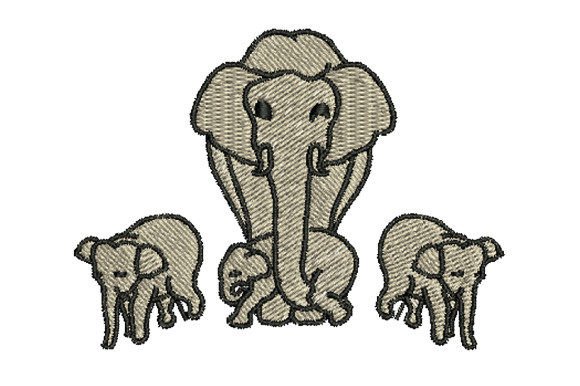
Review: Mother Elephant and Three Baby Elephants
As an embroidery designer who has spent years digitizing patterns for small businesses, I approach every new machine embroidery design with a critical eye. It is not just about whether the image looks cute on a screen; it is about how that design translates into thread, how it holds up on fabric, and ultimately, how it serves the brand identity of the client using it. Today, I am reviewing the Mother Elephant and Three Baby Elephants design, a piece rooted in the Wild Animals category, to determine its viability for commercial embroidery projects.
The product description notes that this cute elephant embroidery was inspired by an abandoned elephant mother with her two baby elephants. Baby elephants usually stay attached to their mother for a while until weaning. This narrative adds an emotional layer to the visual, which is a powerful tool for branding. However, from a technical standpoint, we must look past the sentiment and evaluate the structural integrity of the design for real-world application.
First Impressions and Visual Personality
When I first loaded the digital embroidery file into my viewing software, the immediate impression was one of warmth and approachability. The subject matter—a matriarchal figure surrounded by offspring—naturally leans toward themes of care, protection, and family. For a business owner, this visual personality is crucial. It does not scream "corporate coldness"; instead, it feels friendly, handmade, and slightly rustic.
This aesthetic makes the Mother Elephant and Three Baby Elephants design particularly suitable for brands that want to project trust and nurturing qualities. Think of local bakeries, florists, pet supply boutiques, or creative studios that pride themselves on community connection. The design avoids sharp, aggressive lines, opting instead for softer curves that mimic the natural form of the animals. This softness is excellent for creating a welcoming vibe, but it requires careful handling during the digitizing and stitching process to ensure it does not appear muddy or undefined.
Strategic Applications for Small Business Merch
The true test of any embroidery file is its versatility across different products. Here is how I envision this design performing in a small business context:
- Embroidered Patches: This is perhaps the strongest use case. An embroidered patch featuring the mother and babies can serve as a collectible item or a brand badge. Because patches are often viewed up close, the details of the elephants can shine without the constraints of garment distortion.
- Tote Bag Design: Canvas tote bags are a staple for eco-friendly brands and boutiques. The horizontal composition of a mother with her young fits well across the center or lower corner of a tote. It transforms a simple bag into a statement piece that customers are proud to carry.
- Apron Embroidery: For cafes, bakeries, or craft workshops, staff aprons are walking billboards. Placing this design on the chest or pocket area adds a touch of whimsy and professionalism. It signals to customers that the staff cares about their craft, mirroring the care shown by the elephant mother.
- Cap Embroidery: While possible, cap fronts are tricky. The curved surface of a baseball cap can distort wide designs. If used here, the design must be simplified or reduced significantly to fit the limited hoop size available on standard caps.
- Custom Apparel and Uniforms: For work shirts or polo shirts, this design works best as a left-chest logo accent. It is small enough to be professional but detailed enough to be recognizable. It avoids the bulkiness that can weigh down lightweight uniform fabrics.
Technical Considerations and Production Risks
While the concept is charming, production realities must be addressed. As a designer, I advise caution in several areas when working with the Mother Elephant and Three Baby Elephants motif.
Stitch Density and Fabric Texture: Elephant skin is textured, and if the digitizer has attempted to replicate this with high stitch density, it can cause puckering on lightweight fabrics like cotton poplin or rayon blends. Always test the design on a scrap piece of your actual production fabric. If you are stitching on textured fabric like canvas or denim, the design will hold up better, but you must ensure the thread colors contrast sufficiently against the background.
Small Patch Sizes: If you intend to shrink this design for small labels or tiny patches, you risk losing definition. The three baby elephants, being smaller than the mother, may merge into a single blob of thread if the scale is too small. I recommend checking the minimum recommended size provided with the file. If no size is specified, create a printable mockup at your intended size and inspect it closely. If the details blur, the design is too complex for that application.
Dark Uniforms and Thread Colors: Stitching light-colored elephants on dark navy or black uniforms requires careful planning. You may need an underlay or a satin border to prevent the garment color from showing through the fill stitches. Additionally, ensure that the thread colors chosen for the babies distinctively separate them from the mother. Low contrast between the figures can make the design look flat and unprofessional.
Enhancing Brand Identity and Customer Trust
Why choose this specific design over a generic logo? The answer lies in emotional engagement. In the world of small business merch, customers are buying into a story. The narrative of the abandoned mother and her attached babies resonates with themes of resilience and loyalty. When a customer sees this finished product, they subconsciously associate those values with your brand.
Consistency is key. If your brand identity is built on natural, organic, or family-oriented values, the Mother Elephant and Three Baby Elephants design reinforces that message visually. It adds a layer of perceived value to handmade products. A simple tote bag becomes a cherished accessory; a plain apron becomes a uniform of care. This emotional connection drives buyer engagement and can justify a higher price point for your custom apparel and accessories.
Practical Designer Notes for Implementation
Before you commit to a large production run, follow these steps to ensure quality control:
- Test in Black and White: Before selecting your final thread colors, stitch out the design in black thread on white fabric. This reveals the structural integrity of the digitizing. If it looks good in monochrome, it will look good in color.
- Check Hoop Size Compatibility: Confirm the required hoop size for the design. Ensure your embroidery machine can accommodate this size, especially if you are stitching on finished garments like caps or bags where hooping can be difficult.
- Use Proper Stabilizer: Given the potential weight of the design, use a cut-away stabilizer for stretchy fabrics and a tear-away for stable woven fabrics. This prevents distortion after washing.
- Create a Printable Mockup: Use design assets to place the image on photos of your actual products. Show this to clients or use it for pre-sales. It helps manage expectations regarding size and placement.
- Verify Commercial Licensing: This is critical. Check the license terms included with the digital embroidery file. Ensure you have the right to use the design for commercial purposes, such as selling embroidered patches or branded merchandise. Never assume a file is free for commercial use unless explicitly stated.
In conclusion, the Mother Elephant and Three Baby Elephants design offers significant potential for businesses looking to add a touch of warmth and narrative to their merchandise. It is not just a decorative element; it is a strategic asset for brand storytelling. By respecting the technical limitations of embroidery and applying the design thoughtfully to patches, totes, and uniforms, you can create high-quality, emotionally resonant products that stand out in the marketplace. Always prioritize testing and proper stabilization to ensure that the final product reflects the professionalism of your brand.