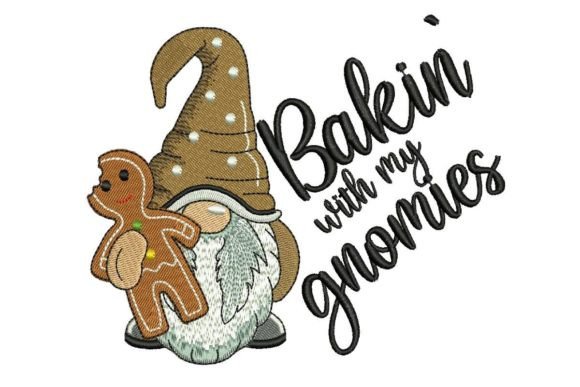
Bakin with My Gnomies: A Designer’s Review
As an embroidery designer who has spent years digitizing files for small businesses, I approach every new machine embroidery design with a critical eye. It is not just about whether the art looks cute on a screen; it is about how it translates to fabric, how it holds up in the wash, and ultimately, how it serves the brand identity of the client using it. Recently, I took a close look at Bakin with My Gnomies, a festive design that promises to be both fun and elegant. For shop owners, Etsy sellers, and apparel decorators, understanding the practical application of this file is crucial before committing to production runs.
First Impressions: Balancing Whimsy and Professionalism
The title alone suggests a playful tone, likely targeting the holiday season or baking enthusiasts. When evaluating Bakin with My Gnomies, my first observation is its potential to bridge the gap between novelty and quality. The product description notes that it is "high-quality" and "easy to stitch," which are two distinct but vital claims. In the world of commercial embroidery, "easy to stitch" often implies optimized pathing and manageable stitch counts, reducing the risk of thread breaks or bird nests during high-volume production.
Visually, the concept leans into the rustic, handmade aesthetic that is currently dominating the boutique market. However, for a design to feel professional rather than amateurish, the digitizing must be precise. The promise that it will look "elegant and gorgeous when stitched onto any fabric" is a bold claim. As a reviewer, I interpret this as a sign that the design likely avoids excessive density, allowing it to sit well on various textiles without causing puckering. This versatility is essential for small business merch, where you might be switching between cotton tote bags, polyester caps, and heavy canvas aprons.
Real-World Applications for Small Business Merch
For bakery owners, craft studios, or local boutiques, Bakin with My Gnomies offers several strategic avenues for branding. Here is how I envision this digital embroidery file performing in real business scenarios:
- Staff Uniforms and Aprons: This is perhaps the strongest use case. An embroidered apron featuring this design adds immediate personality to a bakery or café staff member. It transforms a standard uniform into a conversation starter, enhancing customer engagement. The "gnomie" theme suggests warmth and approachability, key traits for service-based businesses.
- Embroidered Patches: Creating iron-on or sew-on patches is a lucrative side hustle for many embroidery shops. This design, if scaled correctly, could serve as a charming patch for customers to add to their own jackets or bags. It allows the business to sell a standalone product without committing to full garment embroidery.
- Tote Bag Design: Holiday shoppers love reusable bags. Stitching this design onto a natural cotton tote creates a perfect gift-with-purchase item or a low-cost retail product. The contrast of whimsical characters against neutral fabric usually performs very well in retail settings.
- Cap Embroidery: While possible, cap fronts require careful consideration. The curved surface of a baseball cap can distort detailed designs. If Bakin with My Gnomies has clean lines and minimal fine detail, it could work as a left-chest accent or a front-panel feature, adding a festive touch to winter merchandise.
Technical Considerations and Potential Pitfalls
While the aesthetic appeal is strong, technical execution is where many small business owners stumble. Before running a large batch of custom apparel, you must evaluate the specific constraints of the design. The description mentions it comes with multiple formats, but it does not specify exact stitch counts or recommended hoop sizes. This lack of specific data means you must proceed with caution.
Stitch Density and Fabric Texture: If the design has high stitch density, it may pull on lightweight fabrics like tri-blend t-shirts. Always test on a scrap piece of your intended material first. For textured fabrics like towels or heavy canvas, ensure the underlay stitches are sufficient to anchor the design. Using the correct stabilizer is non-negotiable; a cut-away stabilizer is often best for items that will undergo frequent washing, such as aprons and work shirts.
Small Patch Sizes and Detail Loss: If you plan to use this as a small logo accent, be wary of tiny lettering or intricate outlines. At smaller sizes, complex details can merge together, turning legible text into a blob of thread. I recommend stitching a test sample at your smallest intended size to check for clarity. If the "gnomies" lose their definition, the design may not be suitable for small applications like pocket logos or hat sides.
Thread Color Contrast: The success of this design heavily relies on color choice. Since it is categorized under Christmas, traditional reds and greens are obvious choices. However, for year-round use in a bakery, consider earth tones or brand-specific colors. Always check your thread chart against the design’s color stops to ensure the transition between colors is smooth and logical.
Enhancing Brand Identity and Customer Trust
Incorporating Bakin with My Gnomies into your product line is more than just adding decoration; it is a strategic move for brand identity. Consistent use of high-quality embroidery signals professionalism. Customers associate well-stitched garments with higher value. When a customer receives a tote bag or apron with clean, crisp embroidery, their perception of your brand’s attention to detail increases.
Furthermore, seasonal designs help create urgency and relevance. A Christmas-themed embroidery design can drive sales during the fourth quarter, a critical period for many small businesses. By offering limited-edition merchandise featuring this design, you encourage repeat visits and social media sharing. A customer wearing a cute, gnome-themed apron is likely to post a photo online, providing organic marketing for your shop.
Practical Designer Notes for Production
To ensure the best results with this embroidery file, follow these steps before finalizing your production run:
- Test in Black and White First: Stitch a monochrome version to evaluate the structure and density without the distraction of color. This helps identify any overlapping stitches or tension issues.
- Verify Commercial Licensing: The description does not explicitly state the license terms. Before selling any finished product made with this design, confirm with the seller that you have the right to use it for commercial purposes. Protecting your business from copyright infringement is paramount.
- Create a Printable Mockup: Use digital mockups to show clients or stakeholders how the design will look on different items. This helps manage expectations and secure approval before wasting thread and fabric.
- Check Hoop Size Compatibility: Ensure the design fits within your machine’s hoop capabilities. If resizing is necessary, do so proportionally to avoid distorting the aspect ratio, which can ruin the visual balance of the gnomes.
- Compare with Other Design Assets: Place this design alongside your existing branding elements. Does it complement your current logo and color palette? Visual consistency strengthens brand recognition.
In conclusion, Bakin with My Gnomies presents a promising opportunity for small business owners looking to add festive, high-quality flair to their merchandise. Its potential as an apron embroidery staple or a charming patch design is significant. However, success lies in the preparation. By testing on actual fabrics, respecting the limitations of stitch density, and ensuring proper licensing, you can transform this digital asset into a tangible driver of sales and brand loyalty. Always prioritize the quality of the stitch-out over speed, and let the elegance of the finished product speak for your brand.